The Relational Capacity Model
Understanding the processes that shape what becomes possible within and between us.
Developed by Aubrey Reel, LPC
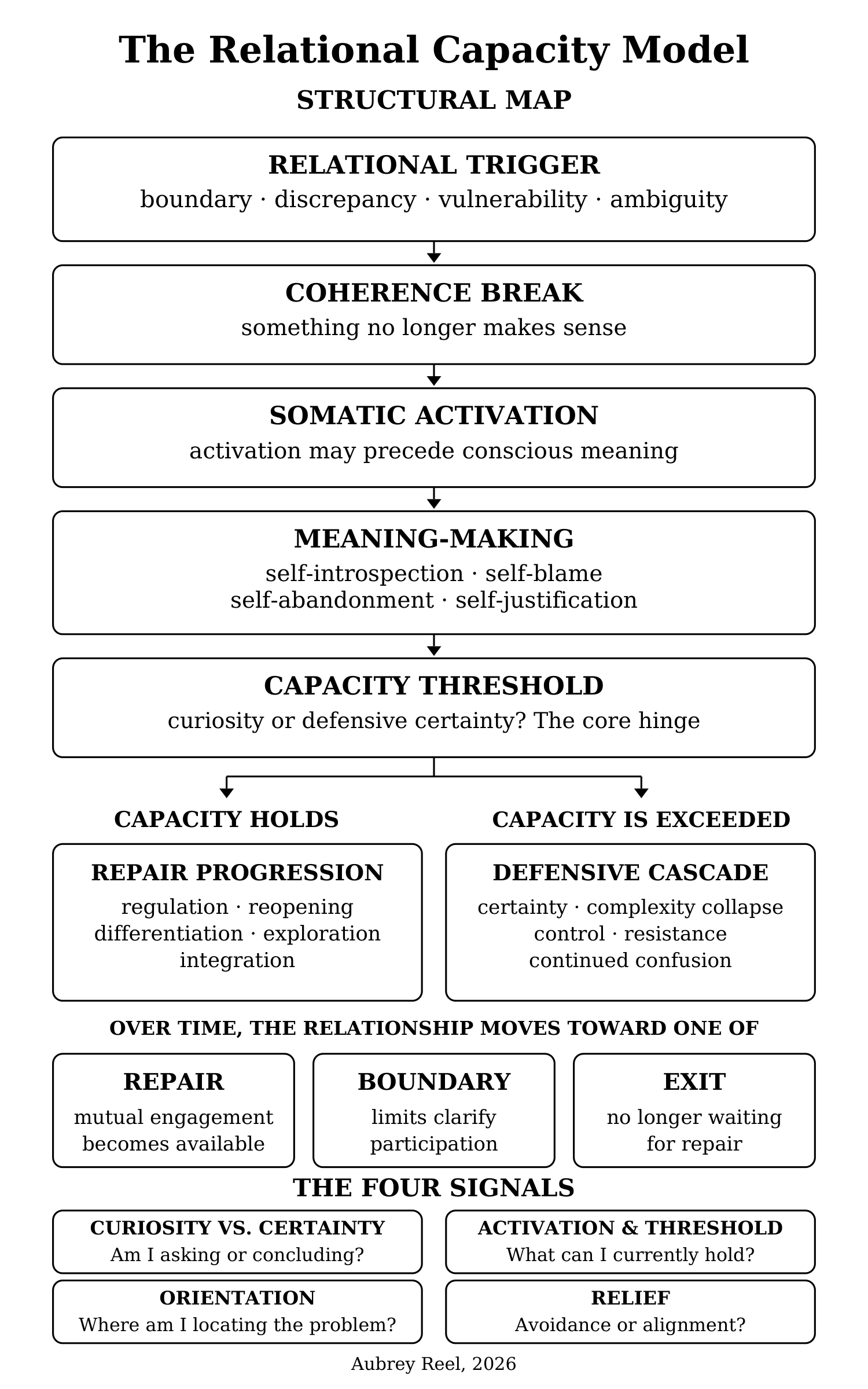
What Is the Relational Capacity Model?
The Relational Capacity Model (RCM) is a framework for understanding how we experience ourselves, interpret others, and navigate relationships, particularly under emotional pressure and uncertainty.
At the heart of the model is a single question:
What is each person capable of holding in this moment, and how does that shape what becomes possible between them?
Relational capacity is our ability to remain emotionally regulated, psychologically open, and relationally engaged in the presence of discomfort, uncertainty, and strain.
Capacity is not the same as desire. We can deeply want connection, honesty, or repair and still lack the capacity to sustain them in a given moment. And because capacity varies from person to person, two people in the same interaction may be working with very different resources. Much of what feels confusing in relationships comes from this difference.
When an interaction disrupts our sense of coherence, we naturally try to make sense of what happened. Our physiological responses, past experiences, protective patterns, and identity conclusions (the beliefs we've formed about who we are and what we can expect from others) all shape the meaning we construct and how we respond.
The RCM examines these processes and the conditions under which we stay open to curiosity, complexity, accountability, and repair, or become organized around certainty, control, and self-protection.
Rather than sorting people into fixed relational types, the model explores how capacity shifts within individuals, across relationships, and under changing conditions. Capacity is not a fixed trait. It can narrow under pressure, and it can grow.
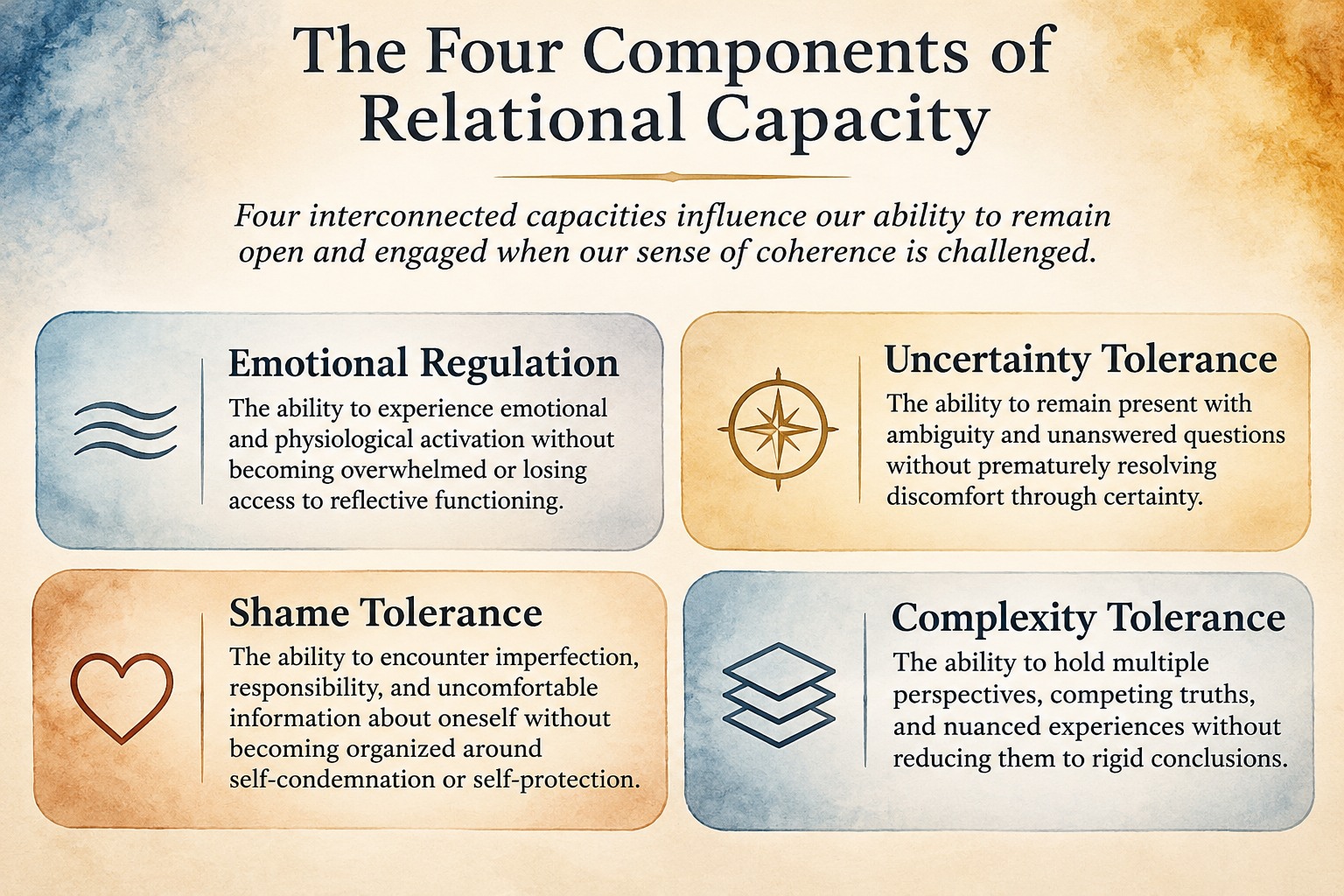
The Four Components of Relational Capacity
Relational capacity involves more than the ability to regulate emotion. Within the RCM, four interconnected capacities influence our ability to remain open and engaged when our sense of coherence is challenged.
The Capacity Threshold: The Core Hinge
What happens when the demands of an interaction approach or exceed our available relational capacity?
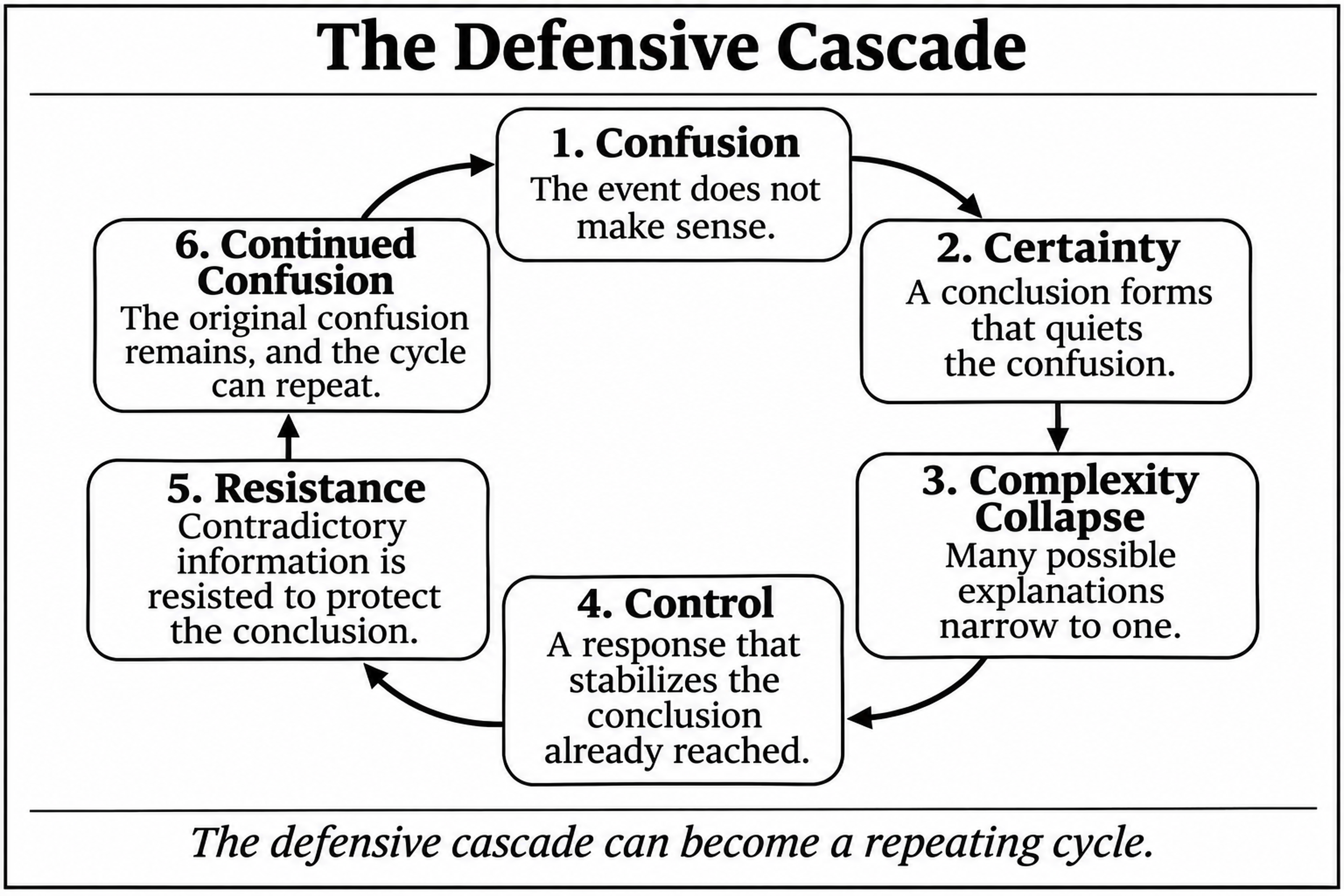
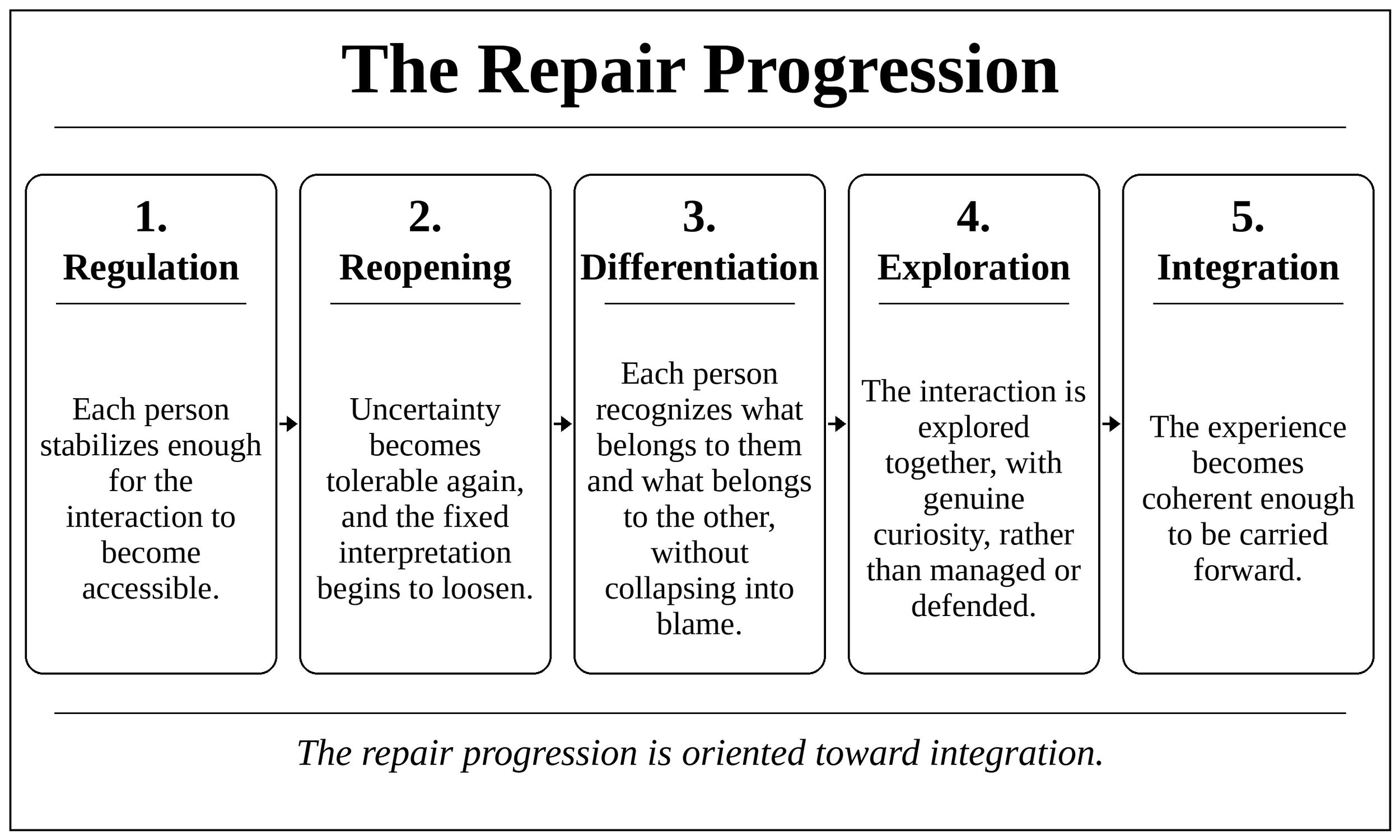
Within the Relational Capacity Model, the Capacity Threshold represents a pivotal point at which an interaction may remain accessible to curiosity and exploration or become increasingly organized around defensive certainty and self-protection.
The Defensive Cascade and the Repair Progression illustrate these contrasting processes. They help us understand why some interactions move toward greater confusion while others become opportunities for shared understanding and integration.
These processes are not rigid or inevitable sequences. Capacity can fluctuate throughout an interaction, and the possibility of mutual repair depends on what each person is able to access and sustain.
Understanding why protective responses occur does not remove responsibility for their relational impact.
Understanding What Is Relationally Possible
Many approaches to relationships focus on communication, emotional awareness, attachment needs, and relational skills. All of these matter.
The RCM asks a different question: under what conditions can we actually access and sustain these abilities?
It recognizes that insight does not automatically become capacity, that capacity is often uneven between two people, and that one person's willingness to repair cannot create mutual repair on its own.
So instead of asking only how to improve a relationship, the RCM asks what is realistically possible within it.
Sometimes greater understanding opens the way to reconnection and repair. Sometimes it leads to clearer boundaries, changed expectations, or the decision to leave.
The model doesn't prescribe a particular outcome. Its purpose is to help people see their relationships clearly, take responsibility for their part, stay distinct from the other person, and choose their way forward.
Theoretical and Clinical Foundations
The Relational Capacity Model is an original conceptual framework introduced in The Distance Between Us: Why Relationships Stop Making Sense and How to Find Your Way Forward.
It draws on attachment theory, trauma research, neurobiology, and the study of emotional regulation, along with clinical observation. The model brings these perspectives together to trace how physiological activation, perception, meaning-making, identity, and protective organization shape the way we function in relationships.
Although informed by established theory and research, the RCM has not yet undergone independent empirical validation. It is offered as a framework for clinical reflection, psychological education, and continued exploration, not as a standardized diagnostic or assessment tool.
Explore the Relational Capacity Model
The Distance Between Us explores the RCM in depth, including:
how the model works
how protective patterns develop
what happens when capacity is uneven between two people
the conditions that make repair possible
how relational maturity grows over time
Get your copy of The Distance Between Us, and download the free companion resources to keep learning and put the framework into practice.